 Goa
GoaQuiet Goa, Away From the Crowds
By Bharat Trails Editors··5 min read·
South Goa's turtle beaches, the island villages reached by free ferry, and the stretches of coast where nobody has built a nightclub yet.
The Goa of the brochures is about fifteen kilometres of coast between Candolim and Vagator, and it is genuinely crowded from December to February. The state has a hundred and five kilometres of coastline. Almost all of the rest of it is quiet, and a good deal of it is quiet on a Saturday in high season, which is the part visitors find hard to believe until they ride south.
The rough geography: North Goa above the Mandovi is the busy half, though its far northern tip beyond the Chapora river is not. South Goa below the Zuari is the calm half, more resort and village than party. And the middle — the islands and the old Portuguese villages in the estuary — is where almost nobody goes at all.
The southern beaches, north to south
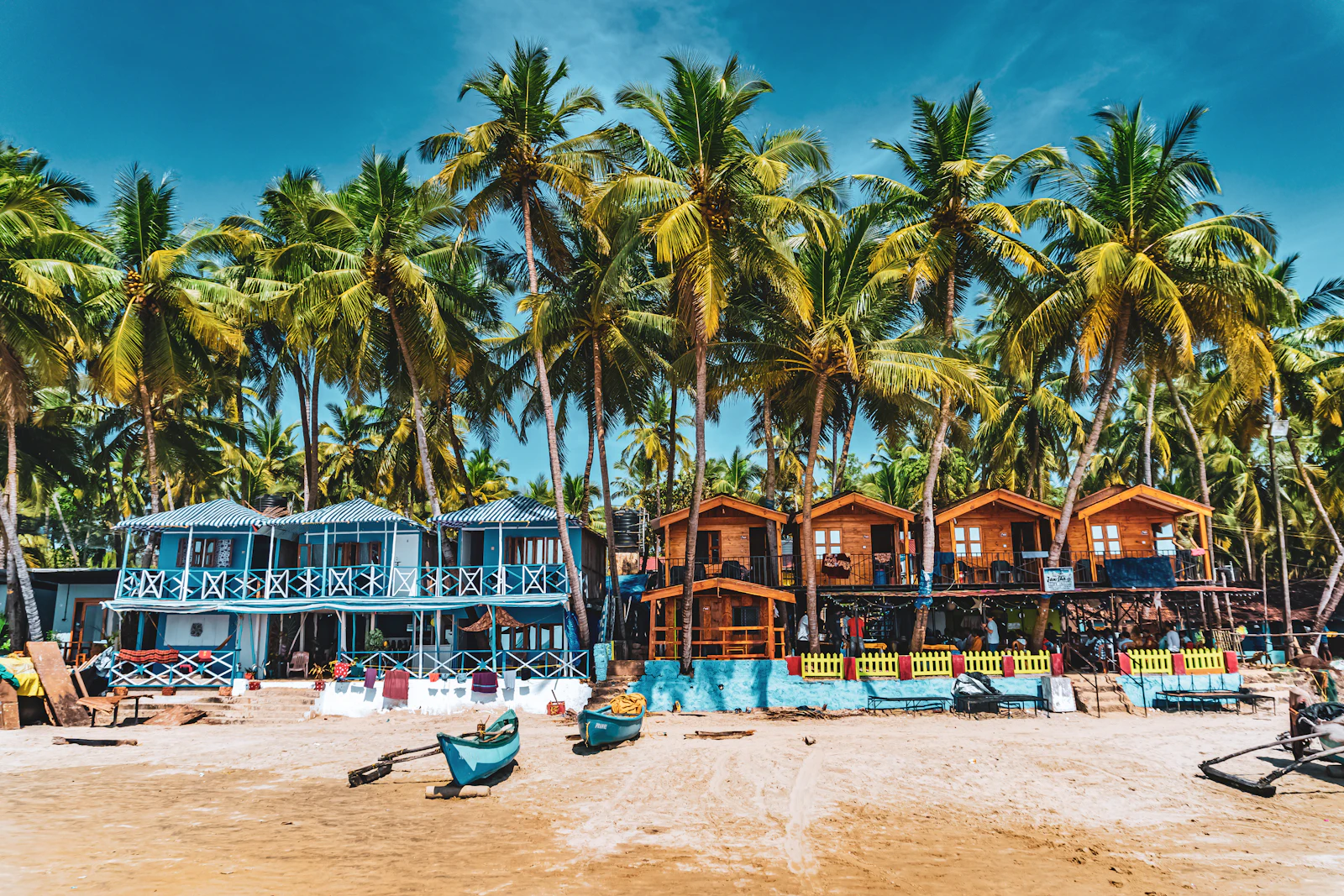
Palolem is the famous one and it is not quiet, but it is the gateway: colourful huts on stilts along a curved bay, and everything south of it gets emptier. Patnem, over the headland, is ten minutes' walk and a different decibel level. Agonda is a long straight stretch with a village behind it and a firm rule against loud music, which is the single best planning decision any Goan panchayat has made.
- Cola Beach — reached down a rough track, with a freshwater lagoon sitting directly behind the sand. There is almost nothing there, which is the point.
- Galgibaga, often called Turtle Beach — an olive ridley nesting site protected by the forest department, with nesting and hatching running roughly November to March. Lights and noise are restricted; follow the signs and keep well back from any marked nest.
- Talpona and Rajbag — two more near-empty stretches on either side of the Talpona river, with a ferry crossing that is worth doing for its own sake.
- Butterfly Beach — a small cove reachable only by boat from Palolem or a steep walk in; go early, before the boats arrive.
- Betalbatim and Cavelossim — long, wide, resort-backed sand in the Salcete belt. Not wild, but you can walk for an hour and see twenty people.
In the far north, past the Chapora, Ashwem and Mandrem are the calmer siblings of Arambol, and Querim — Keri on some signs — is the last beach before the Terekhol river, backed by casuarina and reached by a ferry that carries you and a scooter for nothing. Morjim is an olive ridley site too, which is why the stretch is more regulated than its neighbours.
The islands and villages nobody visits
Divar Island sits in the Mandovi and is reached by ferry from Old Goa in about five minutes. There is one hill, a church at the top — Our Lady of Compassion, built on the site of a demolished Hindu temple — and a view over the whole estuary that is the best free thing in central Goa. The island has a few hundred residents, no hotels to speak of, and one riotous night a year in August when Bonderam, a flag festival with mock battles, takes over Piedade village.
Chorão, the next island along, holds the Dr Salim Ali Bird Sanctuary — mangrove creek, a boardwalk, and the migratory waders that arrive from November. Go at dawn with a boatman rather than at midday on foot. On the mainland, Assagao, Siolim, Aldona and Parra are the Portuguese-era villages worth riding through slowly: the houses have shell-window balcões and oyster-shell shutters, and Parra's palm-lined road is the one everyone has seen in a film without knowing where it is.
Inland, where it stops looking like a beach holiday
Goa's eastern third is Western Ghats — a UNESCO-listed biodiversity hotspot, not a coastline. Tambdi Surla, deep in Bhagwan Mahaveer Sanctuary, is a small twelfth- or thirteenth-century Mahadev temple in black basalt and the only Kadamba-era temple in the state to survive both the Muslim and Portuguese periods intact, largely because it was too far into the forest for anyone to bother destroying. It is tiny, and worth the hour.
Dudhsagar Falls drops around 310 metres in four tiers and is at its most absurd immediately after the monsoon, from October through December. Private vehicles cannot drive to it; you book a forest department jeep from Mollem, and the ride is half the experience. Netravali has a bubbling lake, Sanguem has the Usgalimal rock carvings — prehistoric petroglyphs on a laterite riverbed, unfenced and unattended — and the spice farms around Ponda are genuinely instructive if you pick one that farms rather than one that stages an elephant.
Practicalities for the quiet half
- Rent a scooter. Distances in south Goa are longer than they look on a map and taxis are expensive and organised; a scooter is the difference between seeing three beaches and seeing one.
- Carry cash. ATMs thin out fast below Palolem and a lot of the small places do not take cards.
- There are no lifeguards on most of these beaches and the Arabian Sea has strong rips, particularly at the ends of a bay. Swim where you can see other people swimming.
- Madgaon (Margao) station is the practical rail gateway to the south; Thivim serves the north. Both are better arrival points than the airport for anyone already in India.
- From June to September the shacks come down and many southern places shut entirely. The coast is spectacular, green and empty in the monsoon, but check your accommodation is actually open before you ride four hours.
The best window for the quiet half is either side of the peak: October and November, when the monsoon has just finished and everything is green and the shacks are going back up, or late February and March, when the crowds thin and the sea is still calm. December's last fortnight is the one stretch when even the south fills up.