 Goa
GoaThe Two Kitchens of Goa
Par Bharat Trails Editors··5 min de lecture·
Vindaloo is not a heat rating and xacuti is not curry powder. A guide to Goa's two distinct kitchens, the dishes worth ordering, and where to find them.
Goa has two kitchens, and the beach-shack menu that most visitors eat from for a week represents neither of them very well. One is Goan Catholic, shaped by four and a half centuries of Portuguese rule and built on pork, vinegar, garlic and dried red chillies. The other is Goan Hindu, largely Saraswat, built on coconut, kokum, tamarind and the fish that comes in that morning. They share a coastline and almost nothing else.
Learning about ten dish names is enough to eat well here for a fortnight without repeating yourself, and to stop ordering the butter chicken that exists on the menu solely because someone once asked for it.
The Catholic kitchen: vinegar, pork and chilli
Vindaloo is the most misunderstood dish in Indian cooking. The name is a Goan rendering of carne de vinha d'alhos — meat in wine and garlic — a Portuguese method of preserving pork on long sea voyages. In Goa the wine became palm vinegar and the dish picked up Kashmiri chillies, but it is fundamentally sour, garlicky and pork-based, not a heat challenge. A Goan vindaloo that arrives fluorescent and made with chicken is being cooked for tourists.
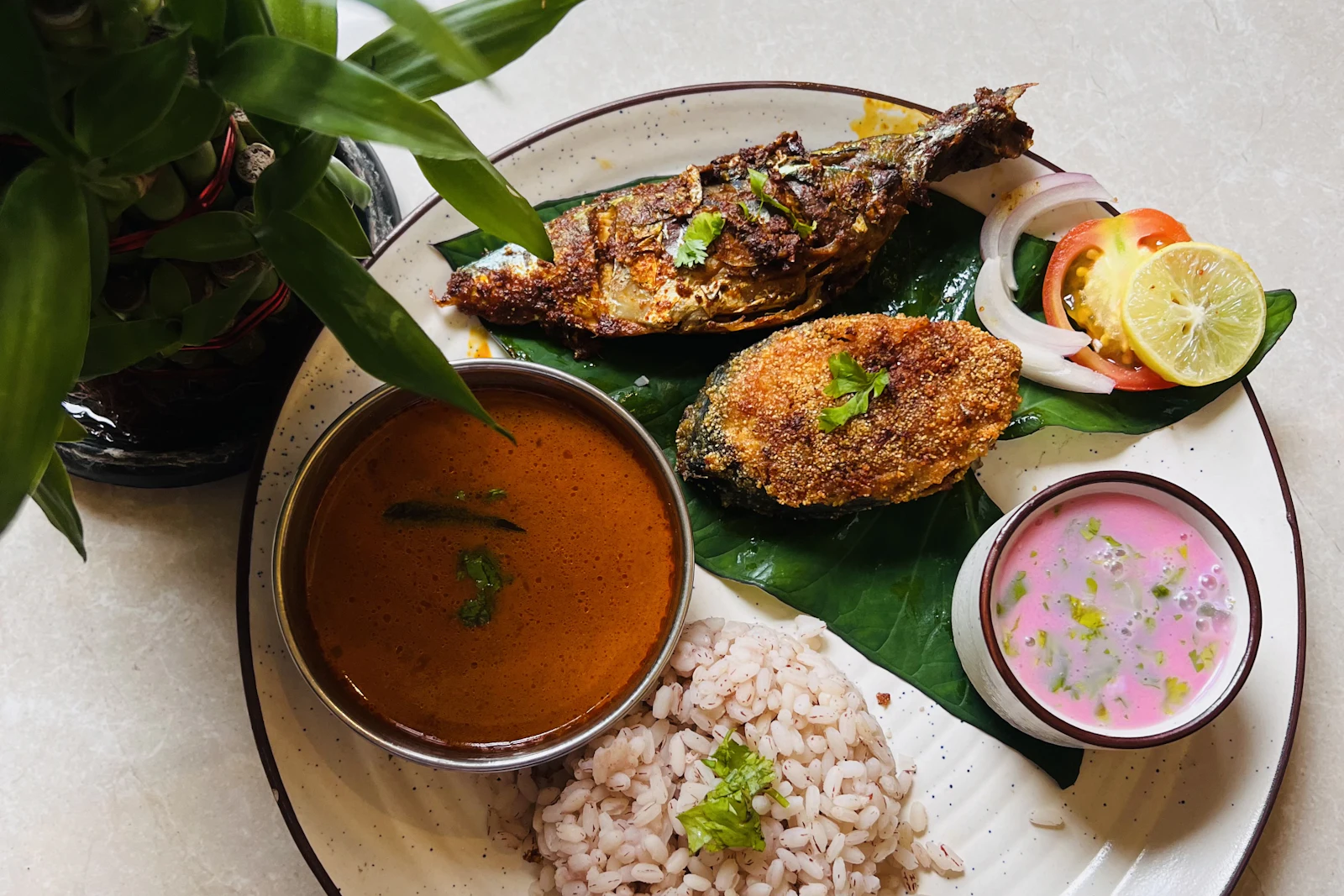
Xacuti, pronounced roughly sha-koo-tee, is the other pillar: a dark, complex masala of dry-roasted coconut, poppy seeds, and something like a dozen whole spices, usually with chicken or crab. Cafreal is the green one — coriander, green chilli, ginger and vinegar — and reached Goa via Portuguese Africa, which is what the name means. Sorpotel is pork with liver and offal in a vinegar gravy, made in advance and reheated for three days before it is considered ready; if a restaurant offers it on Sunday or after a feast, take it. Balchão is prawns or fish in a dense, dark paste of dried shrimp and chilli, closer to a pickle than a curry. Recheado is a red masala slit into a whole mackerel or pomfret and shallow-fried, and it is the single easiest great meal in Goa to order.
- Order Goan chouriço — vinegar-and-chilli cured pork sausage — pan-fried with onions, or stuffed inside poi bread. It is aggressive and very good.
- Ask for poi rather than naan. It is the local wheat-bran bread, slightly hollow, made to be torn and dipped.
- Finish with bebinca, a layered coconut-and-egg-yolk cake baked one layer at a time, traditionally seven to sixteen of them. Serradura and dodol are the other two Portuguese-descended sweets worth ordering.
The Hindu kitchen: coconut, kokum and the day's fish
The everyday Goan Hindu meal is xit kodi — literally rice and curry — a coconut-based fish curry with kokum for sourness, eaten with par-boiled red rice, a fried fish on the side and a vegetable. It is what most of Goa actually eats for lunch, it costs very little at a family restaurant, and it is far better than its plainness suggests.
Khatkhate is a mixed-vegetable and lentil stew, flavoured with triphal, a Western Ghats spice related to Sichuan pepper that gives a faint numbing edge you will not be able to place. Sanna are steamed rice cakes leavened with toddy, spongy and slightly sour. Patoleo are rice-and-jaggery cakes steamed inside turmeric leaves, made around the Feast of the Assumption in August, and the leaf does most of the flavouring. If you are here in August, ask.
Feni, urrak, and what to drink
Feni is Goa's spirit and holds a Geographical Indication, which means the name can only be used for the thing distilled here. Cashew feni is made from the fruit of the cashew apple — not the nut — and it is strictly seasonal, distilled from roughly February to May. Coconut feni, made from palm toddy, runs year-round. Urrak is the first, weakest distillate of the cashew run and exists only in those few months: it is drunk long, with lime soda and green chilli, and it is the single most Goan drink there is.
Feni tastes strongly of the fruit it came from and divides people instantly. Drink it the local way — neat in small measures with a salted lime, or in a lime soda — rather than in a cocktail engineered to hide it. Alcohol is taxed far lower here than in neighbouring states, which is why a bottle in a Goan shop costs a fraction of a Mumbai price.
Where to eat
The rule of thumb is that the best Goan food is served in family restaurants ten minutes inland from wherever you are staying, in a room with a tube light and a fridge full of beer, at half the beachfront price. Ask the person renting you a scooter, not the person renting you a room.
- Vinayak Family Restaurant, Assagao — the standard reference for Goan Hindu home cooking and fish thalis, inland and unglamorous.
- Mum's Kitchen, Panjim — a project to collect and cook recipes from Goan households; the best single menu for someone trying five dishes at once.
- Ritz Classic, Panjim — the fish thali everyone in Panjim eats at lunchtime. Go at noon or queue.
- Martin's Corner, Betalbatim, and Fisherman's Wharf in the south for a longer, more polished dinner.
- Bhatti Village, Nerul — inland, no sea view, and sorpotel and cafreal worth the ride out.
One seasonal warning. From roughly June to September the monsoon shuts most beach shacks — they are temporary structures, dismantled and rebuilt every year — and a state-wide fishing ban means much of the seafood on offer is frozen or from outside Goa. It is a fine time for pork, for Hindu vegetarian cooking and for the inland restaurants that stay open all year. It is a poor time to insist on a fresh kingfish.