 Goa
GoaGoa Beyond the Beaches
Par Bharat Trails Editors··5 min de lecture
Ferries, spice farms, Portuguese churches and a Latin Quarter you can walk in an hour — the Goa that starts about fifteen minutes inland.
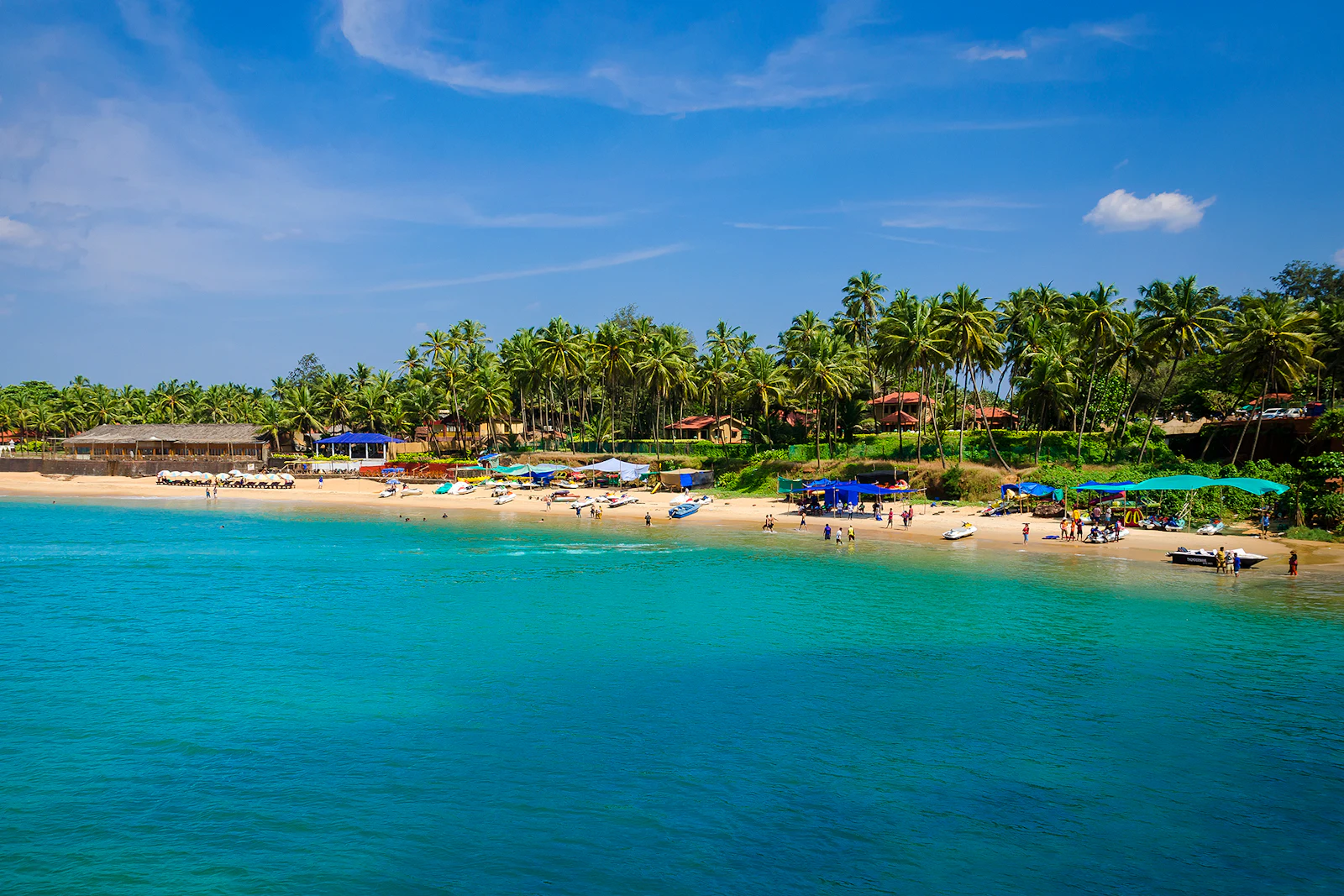
Almost everyone who visits Goa spends their week on a fifteen-kilometre strip of sand and then reports back that Goa is a beach. It is also a four-hundred-year-old Portuguese province, a spice-growing interior, two rivers with working ferries, and one of the few places in India where the local cuisine has its own bread. Rent something with two wheels, point it away from the coast, and the state roughly doubles in size.
Old Goa: a capital that emptied out
Ten kilometres east of Panjim is what is left of a city that in 1600 was bigger than Lisbon and was abandoned in the eighteenth century after repeated epidemics. What survived is the churches, and they are extraordinary — a UNESCO group standing in mown grass where the streets used to be.
The Basilica of Bom Jesus holds the body of St Francis Xavier in a silver casket above a marble mausoleum; the relics are brought down for public viewing roughly once a decade, and the queue when that happens runs for hours. Across the road, Sé Cathedral is the largest church in Asia and its scale only registers once you are inside and small. The Church of St Francis of Assisi next door is the prettiest of the three and the least visited, which tells you something about how tour buses work.
Fontainhas, and a town that reads as European
Panjim's Latin Quarter is about six streets of ochre, indigo and dark-green houses with oyster-shell windows and overhanging balconies, kept that way by a conservation order that forbids the usual white repaint. You can walk all of it in an hour, and should, ideally early, before the light goes hard.
Look for the Chapel of St Sebastian and the crucifix inside it, which came from the Palace of the Inquisition in Old Goa and shows Christ with his eyes open — reportedly so the accused could see him watching. Stop at one of the small cafés on Rua 31 de Janeiro for a poi sandwich and coffee, and take a look at Panjim Church's double-flight staircase on your way out.
The islands the ferries go to
Goa's river ferries are free for pedestrians, cost almost nothing for a scooter, and run on no schedule worth memorising — you turn up, you wait, you roll on.
- Divar Island — from the Old Goa jetty. A near-empty island of Portuguese houses, paddy fields and a hilltop church with the best view of the Mandovi. Half a day, easily.
- Chorão — home to the Salim Ali Bird Sanctuary, a mangrove boardwalk best walked at dawn or in the last hour of light.
- Cumbarjua — the backwater canal between them, where crocodile-spotting boats go out in the early morning.
Inland: spice farms, temples and one waterfall
The Ponda taluka is the green middle of Goa, and it holds two things worth the ride. The spice plantations run tours that are half agriculture and half lunch — you walk between vanilla vines, nutmeg, cardamom and betel palms, and eat a thali on a banana leaf at the end. It is touristy and it is also genuinely informative; the trick is going on a weekday when the group is small.
The Ponda temples are the counterweight to Old Goa. When the Portuguese demolished Hindu temples on the coast, the deities were carried inland past the frontier of Portuguese control and rebuilt — which is why Shri Mangueshi and Shanta Durga look the way they do, with lamp towers and a domed, almost Baroque, Goan-Hindu architecture you will not find in the rest of India.
Dudhsagar Falls sits on the Karnataka border and is at its best from late monsoon through about December, when there is water in it. Private vehicles cannot reach the base; you book a shared jeep at Kulem and take a rough, fun forty-minute ride through the Bhagwan Mahavir sanctuary.
Eat the state, not the beach shack
Beach-shack menus are written for visitors. Goan home cooking is a different thing, and it is Portuguese-Konkani in a way nothing else in India is.
- Fish curry rice — the everyday meal: coconut, kokum, red chilli, with whatever came in that morning.
- Xacuti and cafreal — one dark and roasted-spice heavy, one green with coriander and chilli.
- Sorpotel with sannas — pork, vinegar, and steamed rice cakes; a Catholic celebration dish.
- Poi — the local sourdough-ish pocket bread, still delivered by bicycle in some villages.
- Bebinca — a layered coconut and egg-yolk pudding, baked one layer at a time.
When to go
November to February is the postcard season: dry, warm, busy, and expensive around Christmas and New Year. October and March are the quiet edges of it. The monsoon, June to September, is the season most people never see — everything is green, the waterfalls run, the prices halve, and a fair number of shacks and the Saturday Night Market are closed. If you like your travel empty and wet, it is the best value in the state.