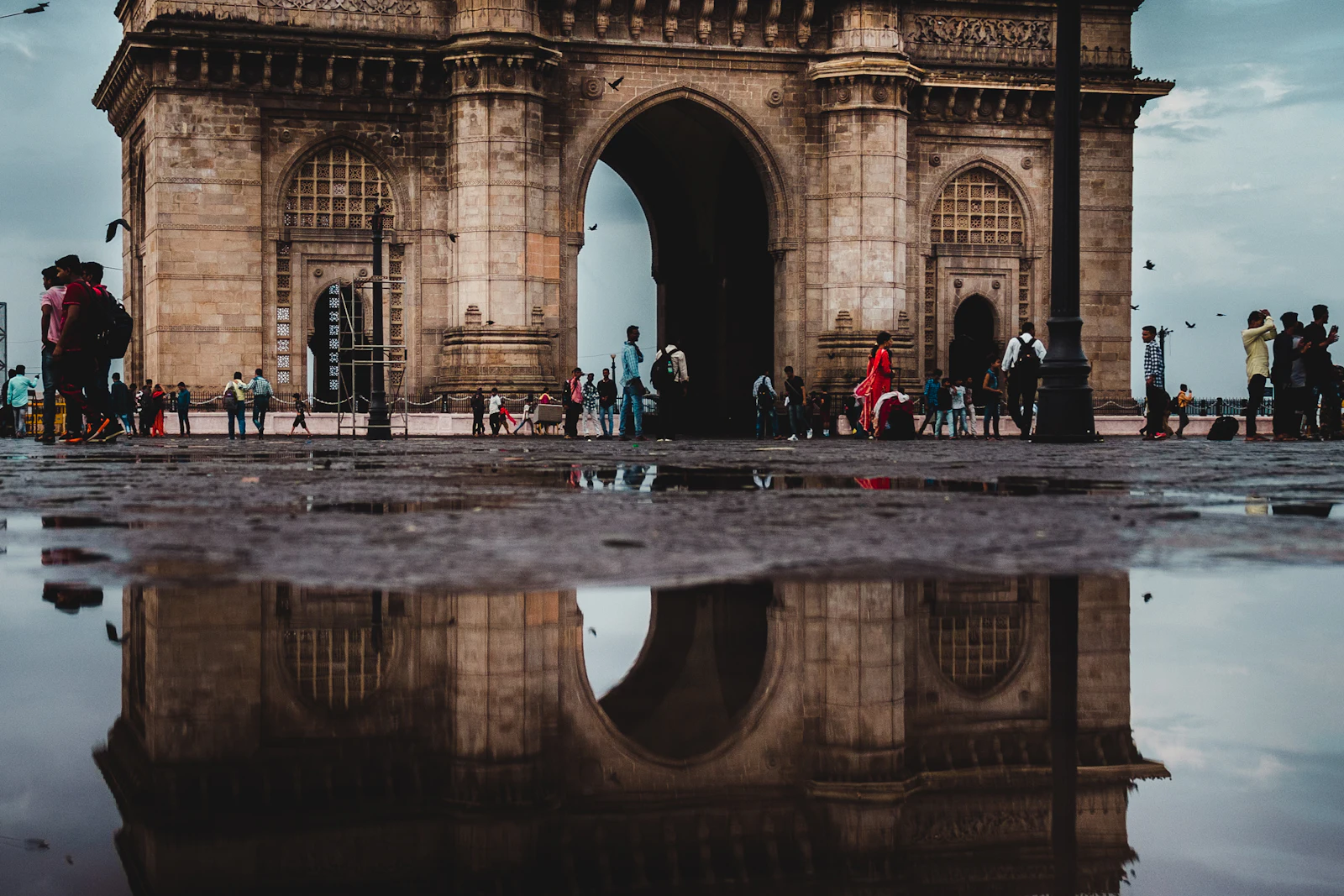
 Mumbai, Maharashtra
Eating Mumbai, Street by Street
Par Bharat Trails Editors··4 min de lecture·
Vada pav at a bus stop, berry pulao in an Irani café, dosa in Matunga and Koli seafood near the docks — a day of eating organised by neighbourhood.
Mumbai does not have a cuisine so much as a set of migrations that all arrived hungry: Gujarati, Parsi, Goan, Malvani, Konkani Muslim, Udupi, Koli. The food map is therefore a map of neighbourhoods, and the only sensible way to eat here is to pick two areas a day and walk them. What follows is organised the way the city is — by where you get off the train.
Morning: Fort and Kala Ghoda, in an Irani café
The Irani cafés were opened by Zoroastrian immigrants from Persia a century ago, they are down to a few dozen from several hundred, and they are the closest thing the city has to a living room. Bun maska — a soft bun, an unreasonable amount of butter — with a cutting chai is the standard order, and dunking is expected rather than tolerated.
If you are in Ballard Estate around lunch, the Parsi berry pulao is the dish to plan a day around: spiced rice, mutton, and imported barberries scattered through it. Go before one o'clock or queue. Parsi bhonu more generally — dhansak on Sundays, patra ni machhi steamed in banana leaf — is a cuisine you cannot eat in many other cities on earth.
Any time: vada pav, and the argument about it
A spiced potato dumpling, deep fried, in a bread roll, with dry garlic chutney. It costs less than a bus fare, it was invented in the 1960s outside Dadar station to feed mill workers, and it is the single best thing about eating in this city. Every Mumbaikar has a stall they insist on, usually near where they went to college, and the correct answer to which is best is whichever one is in front of you and frying.
Its neighbours on the same pavement are worth the same attention:
- Pav bhaji — mashed vegetables on a griddle, butter, a toasted roll; Girgaon Chowpatty in the evening is the classic setting.
- Misal pav — sprouted-bean curry under farsan, fiercely hot, a Pune-Mumbai breakfast. Dadar and Prabhadevi do the serious versions.
- Bhel puri and sev puri — the beach chaat, assembled in ten seconds; eat it where the turnover is highest.
- Frankie — a rolled kati wrap with a vinegar-onion bite, invented in Mumbai in the late 1960s.
Midday: Matunga, for South Indian
Matunga has been a Tamil neighbourhood since the 1920s, and its breakfast halls open early and stop serving well before the tourist day starts. A Mysore masala dosa, an idli-vada plate, and a filter coffee poured between two steel tumblers costs less than a coffee in an airport. The ones worth queueing for have a token counter, a linoleum table and no menu on the wall in English — take that as a good sign.
Evening: Mohammed Ali Road and Bohri Mohalla
The stretch around Minara Masjid is the city's grilling quarter — seekh kebabs, bheja, baida roti, and in Bohri Mohalla the smoked mutton and the enormous sweets that go with it. It is at its most extraordinary during Ramzan, when the road becomes a night-long street festival from iftar until nearly dawn and half the city comes to eat in it.
Nearer Colaba, the lanes behind the Taj do a simpler version of the same thing — kebabs and rolls from about seven in the evening until very late, standing up, next to taxis.
Seafood: the Koli end of town
The Kolis were fishing these islands before there was a city on them, and Malvani and Gomantak kitchens are where their catch ends up — coconut, kokum, and a red masala that has nothing to do with the north Indian idea of curry.
- Bombil, the fish the British called Bombay duck: rava-fried, eaten with the fingers, structurally almost a snack.
- Surmai fry — thick kingfish steaks in semolina crust, the safest great order on any Malvani menu.
- Prawn koliwada — battered, red, invented in the fishing colony it is named after.
- Sol kadhi to finish: pink, cold, coconut and kokum, and a genuinely effective answer to too much chilli.
Practicalities
Street food here is generally safe where the turnover is fast, the oil is clear and you can see the frying happen. It is least safe in the monsoon, when standing water and cut fruit are a bad combination — that is the season to eat in cafés rather than on pavements. Drink sealed bottled water, and be a little careful with ice from carts rather than restaurants.
Move by train wherever you can — it is faster than any car in this city — but not between about eight and eleven in the morning or five and nine in the evening, when the crush is genuinely dangerous for anyone who does not do it daily. Outside those windows, buy a first-class ticket, take a window seat on the harbour side, and treat the ride as part of the meal.