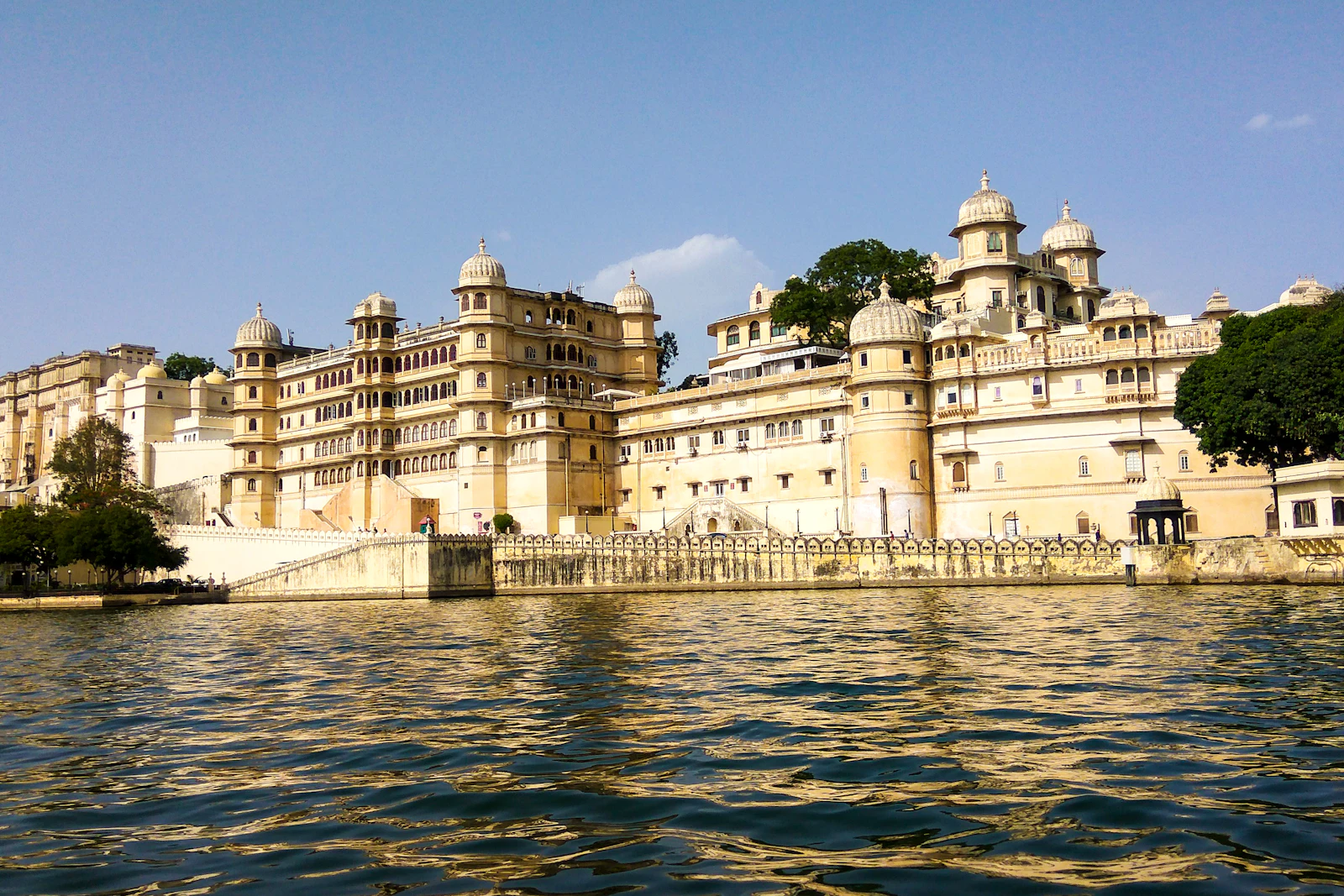
 Udaipur, Rajasthan
A Slow Weekend in Udaipur
Par Bharat Trails Editors··4 min de lecture
Two lakes, one enormous palace and a city that punishes rushing — a 48-hour plan built around sunsets, courtyards and a very long lunch.
Udaipur is small, walkable and built around water, which makes it the rare Rajasthani city where the correct itinerary is a short one. Everything in the old town is within fifteen minutes on foot of everything else, and the single most valuable thing you can schedule is nothing at all, at about half past five, facing west.
Friday evening: arrive and find the water
Drop your bags and walk to Gangaur Ghat. Cross the footbridge to the Ambrai side of Lake Pichola — the old town's rooftops all face the wrong way for sunset, and from the far bank you get the City Palace, the Lake Palace and the hills behind them all in one frame as the light goes orange. Every café along that strip knows exactly what it is selling; sit down an hour early and let it happen.
Afterwards, Bagore ki Haveli does a folk performance most evenings at seven — Rajasthani dance, puppetry, and a woman balancing an implausible number of pots on her head. It runs about an hour, tickets are sold at the door, and the haveli's own courtyards are worth arriving early for.
Saturday morning: the City Palace, properly
This is the largest palace complex in Rajasthan, grown over four centuries by the Mewar rulers, and it is not a one-hour visit. The route runs upward through a sequence of narrowing courtyards — Mor Chowk with its glass peacocks, the Zenana Mahal, Badi Mahal's garden sitting improbably on the roof — and ends with the view down over Pichola that every photograph of this city is taken from.
Go at nine when the gates open. By eleven the staircases are single-file. The Crystal Gallery is ticketed separately and is either a marvel or an expensive room full of glass furniture, depending on your temperament.
Saturday afternoon: crafts, gardens and a nap
The heat peaks between two and four, so spend it indoors or under trees. Saheliyon ki Bari is a small eighteenth-century garden built for the queen's attendants, all fountains, lotus pools and marble elephants, and it takes forty unhurried minutes. Shilpgram, seven kilometres out, is a craft village with artisans from across western India working in the open.
Udaipur is also where you learn miniature painting. Several workshops in the old town lanes run two-hour introductions on squirrel-hair brushes and handmade paper; it is the least touristy souvenir in Rajasthan because you made it badly yourself.
End the day at Sajjangarh, the Monsoon Palace, on the ridge above the city. Go up about ninety minutes before sunset — the last stretch runs through a wildlife sanctuary and private cars are usually left at the gate for a shared jeep.
Sunday: out of town, or slower still
Two ways to spend a last day, depending on energy:
- Ranakpur and Kumbhalgarh — about two hours away, best as a single long day trip. Ranakpur's Jain temple has 1,444 carved marble pillars, no two alike; Kumbhalgarh's fort wall runs for 36 kilometres, second only to the Great Wall.
- Stay in town — Fateh Sagar lake for a morning cycle, the Ahar cenotaphs where the Mewar rulers were cremated, and Badi Lake, twelve kilometres out, where locals go when the old town fills up.
- Do neither, and take a boat at five instead.
What to eat
Mewar cooking is the meat-eating end of Rajasthani food, a legacy of hunting kitchens. Laal maas — mutton in a fierce Mathania chilli gravy — is the dish the region is known for, and the good versions are hot enough to be a decision rather than a meal. Vegetarians have the better everyday spread: dal baati churma, gatte ki sabzi in yoghurt gravy, and ker sangri, made from desert berries and beans that grow where nothing else will.
When to go
September to March. The weeks right after the monsoon are the underrated ones: the lakes are full, the hills are green rather than brown, and the city looks the way the paintings do. April to June is 40°C-plus and the lakes can drop alarmingly in a bad year. Time a March or April visit with Gangaur and the Mewar Festival processions come down to the water by lamplight.